
Tattoo Meanings and Symbols: Finding What Speaks to You

Tattoo Meanings and Symbols: Finding What Speaks to You
You have been saving images for months.
Maybe it started with one design you saw on someone's wrist at a coffee shop. Then an artist's portfolio on Instagram. Then a Pinterest board that grew from ten pins to two hundred. And somewhere in that collection, a pattern emerged. Certain shapes kept appearing. Certain symbols kept calling you back.
Now you are trying to figure out what it all means. Not just what the internet says these symbols represent, but what they could mean for you. Whether the meaning is "enough." Whether people will ask, and whether you will have a good answer.
This is where most people get stuck. Not on the design itself, but on the weight of permanent meaning.
Why We Search for Meaning Before Getting Inked
The question "what does this tattoo mean?" comes from a reasonable place. You are putting something on your body forever. It feels like it should stand for something. It feels like you need a story ready for when people ask.
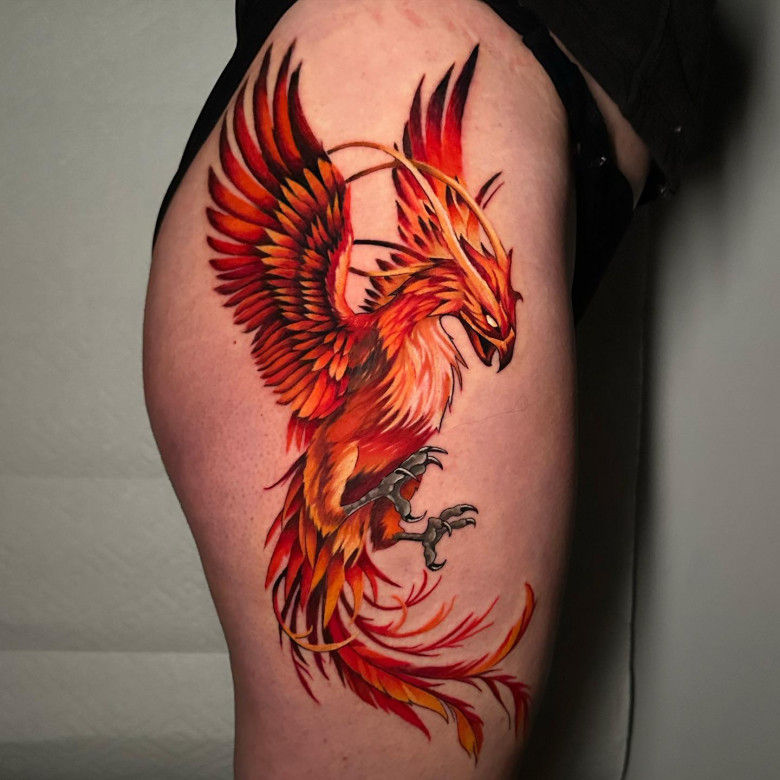
But here is what years of tattooing teaches you: the people who wait for the perfect meaning often wait forever. And the people who follow what draws them, even when they cannot fully articulate why, tend to be the ones who never regret their ink.
Meaning is not always a clear narrative. Sometimes it is a feeling that refuses to leave. Sometimes it is an image that keeps surfacing in your saved folder, week after week, until you finally admit you want it.
The search for meaning is valid. But it should not become a barrier that keeps you from something you already know you want.
The Difference Between Universal and Personal Symbolism
When you search "what does a butterfly tattoo mean," you will find articles listing transformation, rebirth, freedom, the soul. These are the universal meanings. They have developed over centuries, across cultures, through shared human experience.
Universal symbolism carries weight. There is comfort in knowing that humans have looked at butterflies for thousands of years and seen the same thing: something fragile becoming something that can fly.
But then there is personal symbolism. The butterfly your grandmother used to point out in her garden. The one you saw the morning after a difficult decision, when you stepped outside and it landed near your feet. The reason you keep saving butterfly designs has less to do with "transformation" as an abstract concept and more to do with a specific memory, a specific feeling, a specific version of yourself you want to carry forward.
Personal symbolism does not need external validation. It does not need to match what Google says. It only needs to matter to you.
The most meaningful tattoos often sit at the intersection of both: a universal symbol that also carries private significance.
Common Tattoo Symbols and What They Traditionally Represent
Understanding traditional meanings can help you identify why certain images resonate. Here is what common symbols have represented across tattooing history.
Cranes appear frequently in East Asian tattooing traditions, representing longevity, wisdom, and good fortune. In Japanese tattooing, the crane often symbolizes a wish for a long and healthy life. Many people are drawn to cranes without knowing this history, simply because the bird's elegance speaks to something they cannot name.

Snakes carry complex symbolism depending on cultural context. In some traditions, they represent healing and transformation through the shedding of skin. In others, they symbolize protection or hidden knowledge. A snake tattoo can mean danger or rebirth or both at once.
Flowers each carry their own language. Roses have been associated with love and passion for centuries, but also with secrecy in some contexts. Cherry blossoms in Japanese tradition represent the fleeting nature of life, beautiful precisely because it does not last. Lotus flowers grow from mud into something pristine, making them symbols of overcoming difficulty.
Geometric patterns connect to something more abstract: order, structure, the underlying mathematics of the universe. People drawn to geometric tattoos often describe wanting something that feels timeless, something that exists outside of trend.
Animals carry the traits we project onto them. Lions for courage, wolves for loyalty or independence, birds for freedom. These associations run deep in human psychology, which is why animal tattoos remain consistently popular.
The point is not to choose a symbol because of its traditional meaning. The point is to understand why you might already feel drawn to certain images without knowing their history.
What If You Want Something That Has No Meaning
Some people sit in consultation chairs and say, almost apologetically, "I just think it looks beautiful."
This is not a lesser reason. This is a complete reason.
Not every tattoo needs to be a chapter from your autobiography. Some ink exists purely for aesthetic pleasure. You are allowed to decorate your body the way you would decorate a space you love. Art does not always require explanation.
At Hon Tattoo, many clients choose designs because the composition appeals to them, because the line work is satisfying, because they simply want to look at it for the rest of their lives. These tattoos are no less valid than memorial pieces or symbolic work.
The pressure to have a deep meaning comes from outside, from people who might ask "what does it mean?" You can answer that question with "I love how it looks," and that is a complete sentence.
Beauty for its own sake has been a valid artistic pursuit for all of human history. Your tattoo can be part of that tradition.
How to Know If a Meaning Will Last
The worry underneath all this research is usually the same: will I still feel this way in ten years? Will this meaning still matter to me?
Here is what experienced tattoo artists observe. The tattoos people regret are rarely the ones with personal meaning. They are usually the ones that were trendy, impulsive, or done to mark a relationship that no longer exists.
A tattoo that honours a specific version of yourself, even a version you grow beyond, tends to age well emotionally. You at twenty-five is still part of who you are at forty-five. The symbol that mattered to you during a particular chapter remains a record of that chapter, even after you have written new ones.
The question is not "will I be this person forever?" The question is "am I being honest about who I am right now?"
Meaning that comes from genuine self-reflection tends to last. Meaning that comes from trying to project a certain image to others tends to feel hollow eventually.
Questions to Ask Yourself Before Deciding
Instead of searching externally for meaning, try turning inward. Sit with these questions before your consultation.
What keeps appearing in my saved folder, even when I try to branch out? The designs you keep returning to are telling you something. Pay attention to the pattern.
If no one ever asked me what this meant, would I still want it? This strips away the performance aspect. It gets to whether the tattoo is for you or for an audience.
Does this connect to a memory, a feeling, or a hope? Any of these is enough. You do not need all three. You just need one genuine anchor.
Am I choosing this because it feels like me, or because it looks like someone I want to be perceived as? These are different motivations. Both can lead to good tattoos, but knowing which one you are operating from helps you make a clearer decision.
Would I be content if this remained a private meaning? Some of the most powerful tattoos carry stories their owners never tell. The meaning exists between you and the ink, and that is enough.
The Moment When Meaning Becomes Clear
Sometimes meaning arrives before the tattoo. Sometimes it arrives after.
There are people who get memorial tattoos years before they fully process the grief the tattoo represents. There are people who get abstract designs and only later realize what they were trying to express. There are people who choose something for purely visual reasons and then discover, over time, that it captures something they could not have articulated at the appointment.
Tattoos are not static. They live on a body that changes, in a life that unfolds. The meaning you assign today is the beginning, not the end.
This is part of why permanence is not the threat it feels like. A tattoo does not lock you into one interpretation of yourself. It becomes part of the ongoing story, gaining new layers as you do.
When You Are Ready to Move Forward
You have done the research. You have examined the symbols. You have sat with your saved images and asked yourself the hard questions.
At some point, the preparation becomes its own form of avoidance. Not always, but sometimes. The search for perfect meaning can be a way of not having to commit, not having to trust yourself, not having to make the thing real.
If you have arrived at a design that keeps pulling you back, if the meaning feels honest even when you cannot fully explain it, if you can picture this on your body without dread, then you already have your answer.
The consultation is where you bring all of this to someone who can help translate it into ink. A good artist will not judge your reasons. They have heard every possible motivation, from profound to practical. Their job is to make the thing you want, not to evaluate why you want it.
When you are ready, we are here.
Frequently Asked Questions About Tattoo Meanings
What does a semicolon tattoo mean?
A semicolon tattoo represents continuation, the choice to keep going when you could have stopped. It became associated with mental health awareness and suicide prevention, symbolizing that your story is not over. Many people get semicolons after difficult periods as a mark of survival and hope.
Do tattoos have to have meaning?
Tattoos do not require any meaning beyond personal preference. Many people get inked purely for aesthetic reasons, and this is completely valid. The significance of a tattoo is determined entirely by the person wearing it, not by external standards or expectations.
What is the most common meaningful tattoo?
Memorial tattoos for loved ones remain among the most common meaningful pieces. Dates, names, portraits, and symbols associated with someone who has passed are consistently popular. Birth flowers, coordinates of significant places, and cultural heritage symbols also rank highly.
How do I choose a tattoo that will not feel dated?
Choose imagery that reflects personal significance rather than current trends. Classic symbols, nature elements, and designs with cultural or historical roots tend to age better than memes, pop culture references, or styles that are peaking in popularity. Trust what resonates with you specifically.
Can the same symbol mean different things to different people?
Absolutely. A rose might represent love to one person, a deceased grandmother to another, and simply aesthetic beauty to a third. Symbols are starting points, not fixed definitions. Your personal context shapes the meaning far more than any universal interpretation.
Visit Hon Tattoo Studio
Downtown Toronto
202 Queen St W, 2nd Floor, Toronto, ON M5V 1Z2
(437) 533-7749
North York
6293 Yonge St, North York, ON M2M 3X6
(905) 604-5102
Vaughan
9671 Jane St Unit 4, Vaughan, ON L6A 3X5
(416) 728-8922
Website: hontattoo.com
Instagram: @hontattoostudio
https://www.instagram.com/hontattoostudio/
Also, if you click the button below and send us your tattoo-related questions, we will do our best to provide you with accurate answers.


