
Small Tattoo Designs For Men
- hontattoostudio
- 12 minutes ago
- 8 min read

Small tattoo designs for men are a good choice if the design is built for the size, the placement supports clean healing, and the details will still read well years later. The biggest mistake is choosing a concept that only looks good enlarged, then shrinking it until it loses clarity. Before deciding, focus on four things: whether the idea suits a small format, where it will age best, how bold or delicate the linework should be, and which artist’s style actually matches the design.
What does “small tattoo designs for men” mean in practice?
In practice, “small” usually means a tattoo that reads clearly at a glance without needing a lot of surface area. That can be a simple symbol, a short word, a small animal silhouette, a geometric mark, a fine line object, or a compact blackwork piece.
The important part is not the label. It is whether the design still works once reduced.
A small tattoo succeeds when:
- the main shape is obvious
- the contrast is strong enough to stay readable
- the details are limited to what the skin can hold
- the placement gives the design enough room to breathe
A lot of clients start with a large idea and try to compress it. That is where problems begin. Portraits, highly detailed landscapes, complex script, and multi-element collages often need more space than people expect. A strong small tattoo is usually edited, not just shrunk.
Who is this a good fit for?

Small tattoos are a good fit for someone who wants a subtle piece, a first tattoo, a design with personal meaning that does not need to dominate the body, or a placement that works better with compact scale.
They are especially useful for:
- first-time clients who want to learn how they sit and heal
- people building a patchwork sleeve over time
- clients who prefer understated work
- designs that rely on a single strong idea rather than many details
They are less ideal if your priority is realism, dense storytelling, or very intricate lettering. Those can be done small in some cases, but only with careful simplification and the right artist. If your concept depends on tiny features to make sense, going small may work against you.
What commonly goes wrong?
The most common problem is loss of readability. A tattoo can look sharp on the day it is done and still become muddy, crowded, or hard to identify later if the design was too ambitious for the size.
Here is what tends to go wrong:
Too much detail for the scale
Tiny eyes, feathers, clock gears, city skylines, and realistic textures often blur together if they are packed into a very small area. Skin is not paper. It softens edges over time.
Delicate lines in high-friction placements
Very fine work on fingers, hands, feet, or areas that rub constantly can heal less predictably and may not hold as crisply as the same design on the forearm or upper arm.
Poor placement choice
A small tattoo can look lost on a large flat area if it is not positioned intentionally. It can also distort if placed across a bend, joint, or muscle movement line without planning.
Script that is too small
Lettering is one of the easiest ways to make a small tattoo unreadable. Tight spacing, thin strokes, and ornate fonts often age poorly at miniature sizes.
Choosing style before suitability
Some clients choose a style because it is trending, not because it suits the concept. A small memorial piece, for example, may work better as clean blackwork or simplified fine line than as micro realism if the available space is limited.
What affects the long-term result?

Long-term result depends more on design decisions than on the tattoo being “small.” A well-designed small tattoo can age better than a badly planned large one.
The main factors are:
1. Design clarity
The simpler the visual idea, the better it usually lasts. One clear focal point ages better than several competing elements.
2. Line weight
Lines that are too thin for the concept may not keep the same crisp separation over time. That does not mean every small tattoo needs bold heavy outlines, but the line weight has to suit the placement and the amount of detail.
3. Spacing
Negative space matters. If every part of the design touches or nearly touches, the tattoo has no room to stay legible as the skin naturally changes.
4. Placement
Some placements are more forgiving than others. Areas with less friction and more stable skin often hold fine detail better than hands, fingers, ribs near constant movement, or feet.
5. Technical execution
Even a simple tattoo needs precision. Clean saturation, consistent line depth, and controlled spacing make a major difference in how a small piece heals and settles.
Best placements for a small tattoo

The best placement is the one that supports both the design and the way you want it to be seen. For many men, the most reliable placements for small work are the outer forearm, inner forearm, upper arm, calf, and upper chest.
These areas usually offer:
- enough flat or gently curved space
- decent visibility options
- more predictable healing than high-friction spots
- room to scale slightly up if the design needs it
Placements that need more caution for small tattoos include:
- fingers
- sides of hands
- feet
- around joints
- very curved or narrow areas
That does not mean those placements are wrong. It means the design often needs to be bolder and simpler there.
A useful rule: if you only like the idea at a very tiny size in a difficult placement, ask whether you love the concept itself or just the minimal look. Sometimes moving it slightly or increasing it by even a small amount produces a much better long-term tattoo.
Professional Perspective: how we evaluate a small tattoo idea
A professional does not just ask whether a design looks good today. We ask whether it will still make sense on skin after healing and after years of normal softening.
For a small tattoo, the evaluation usually comes down to five criteria:
Long-term readability
Can someone tell what it is without studying it up close? If not, the design may need simplification, stronger contrast, or more size.
Design suitability
Some concepts are naturally strong at small scale: symbols, clean florals, simple animals, geometric forms, compact blackwork, and short lettering with proper spacing. Others need editing before they belong in a small format.
Placement
Does the body area support the level of detail? A fine line piece on the forearm is a different decision than the same piece on a finger.
Scale
Can the design be made slightly larger without losing the subtle feel? Often the best professional advice is not “go big,” but “go just big enough.”
Technical execution
Which style gives the concept the best chance to heal cleanly? Fine line, blackwork, micro realism, illustrative, and geometric work all behave differently at small scale. The right artist will know where to simplify, where to strengthen, and where to say no.
That last point matters. A good tattooer is not protecting a trend. They are protecting the result.
What should you ask a professional before deciding?
Ask questions that test the design, not just the appointment logistics.
Useful questions include:
- Will this concept still read clearly at the size I want?
- Is this placement good for this amount of detail?
- Would you simplify or enlarge any part of it?
- What line weight would you recommend for longevity?
- Is this better suited to fine line, blackwork, illustrative, or another style?
- Do you have healed examples of similar small tattoos?
Those questions usually reveal more than asking for a general opinion. They force a practical discussion about skin, scale, and execution.
Design directions that tend to work well small
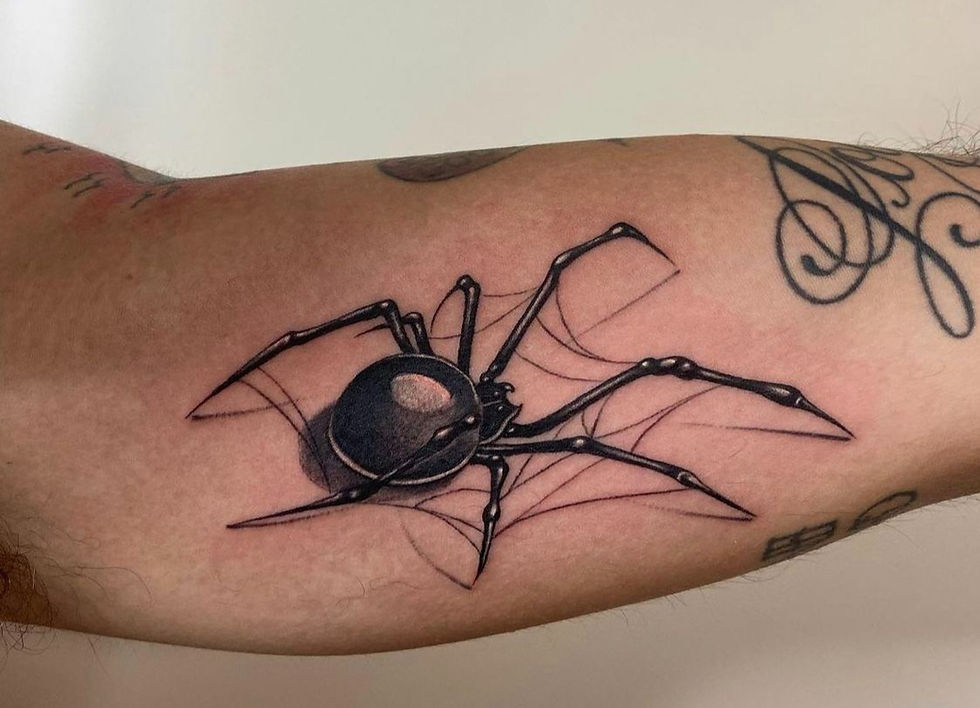
Not every idea belongs in a tiny format, but some categories consistently translate well.
Strong options often include:
- minimalist symbols
- clean geometric forms
- simple blackwork motifs
- compact illustrative icons
- short lettering with open spacing
- small animals or objects reduced to essential shapes
- micro realism only when the subject is simple and the artist is highly specialised
If your idea is sentimental but visually complicated, the best move is often to reduce it to one element. A single flower from a larger memory, one date instead of a full quote, or one object instead of a full scene usually makes a stronger tattoo.
Related Artists
Based on the verified studio roster, these artists are the most relevant depending on the direction of the design:
- Winnie — Vaughan — Fine Line
- Brandon — Vaughan — Fine Line
- Rima — Vaughan — Micro Realism, Fine Line
- Anu — North York — Fine Line
- Jennifer — North York — Fine Line, Lettering
- Lisa — North York — Micro Realism
- Oliver — North York — Micro Realism
- Marcus — Downtown — Micro Realism
- Anji — Downtown — Fine Line
- Sui — Vaughan — Geometric
- Nika — Vaughan — Blackwork
- Yongha — Downtown — Blackwork
- Sarah — Downtown — Blackwork
- Madelyn — Vaughan — Illustrative
- Ryanne — North York — Illustrative
The right match depends on the actual concept. A tiny geometric mark, a fine line word, and a compact blackwork symbol may all be “small,” but they should not automatically go to the same artist.
Related Styles
Related Areas
- Vaughan
- Downtown
Frequently Asked Questions Small Tattoo Designs For Men in Toronto
Do small tattoos age badly?
No, not automatically. Small tattoos age well when the design is simple enough, the spacing is intentional, the placement is suitable, and the linework is done at a scale the skin can hold. They age badly when too much detail is forced into too little space.
What is the best first small tattoo for men?
The best first small tattoo is usually a design with one clear idea and a placement that heals predictably, such as the forearm or upper arm. Simple symbols, clean blackwork, compact illustrative designs, or short well-spaced lettering are often safer first choices than highly detailed realism or ornate script.
How small is too small for a tattoo?
A tattoo is too small when the important details cannot be tattooed with enough separation to remain readable after healing. There is no universal measurement because it depends on the design, style, and placement. A professional should be able to tell you where the minimum workable size begins for your specific idea.
Are fine line small tattoos a good choice?
They can be, but only if the concept suits fine line and the placement supports it. Fine line works best when the design is already simple. If the image depends on many tiny details or goes into a high-friction area, a slightly bolder approach may produce a better long-term result.
Should I choose placement first or design first?
Usually start with the design idea, then choose a placement that supports it. Some concepts only work well in certain areas, and some placements require the design to be simplified or made bolder. The best decision comes from evaluating both together rather than treating them as separate choices.
Related Articles
Suggested internal links:
If you are narrowing down a small tattoo idea, the most useful next step is to bring the exact concept and placement to an artist whose style matches it, then ask how they would adjust it for clarity and longevity.
Visit Hon Tattoo Studio
Downtown Toronto
202 Queen St W, 2nd Floor, Toronto, ON M5V 1Z2
(437) 533 7749 - hontattoodowntown@gmail.com
North York
6293 Yonge St, North York, ON M2M 3X6
(905) 604 5102 - hontattoostudio@gmail.com
Vaughan
9671 Jane St Unit 4, Vaughan, ON L6A 3X5
(416) 728 8922 - hontattoovaughan@gmail.com
Website: hontattoo.com
Instagram: @hontattoostudio
Also, if you click the button below and send us your tattoo-related questions, we will do our best to provide you with accurate answers.


