
First Tattoo Placement Toronto: How to Choose the Right Spot
Updated: Jun 10

Choosing the spot is usually harder than choosing the tattoo.
Most people planning a first tattoo placement in Toronto are not asking one simple question. They are asking several at once. How much will it hurt? Will it heal badly under clothes? Will work make it awkward? Will it still feel right a few years from now?
That hesitation is normal. A first tattoo often feels exciting until placement makes it real. Once you pick the body area, you are no longer thinking in the abstract. You are thinking about pain, visibility, movement, dress codes, and whether the design still makes sense on your body.
This guide is here to make that decision clearer. We will look at pain tolerance, visibility, healing, work life, and design longevity so you can narrow down the right area before your consult and ask better questions when you get there.
First tattoo placement is a decision about lifestyle, not just anatomy

First tattoo placement is the body location that best matches your daily life, comfort level, and long-term goals.
A lot of first timers compare placements only by pain charts. That makes sense, but it leaves out the part that affects regret more often. A tattoo lives inside your routine. It shows up in the mirror, under clothing, during workouts, at work, and during healing.
The better question is not “where hurts least.” It is “where fits my actual life best.” A lower pain area can still be the wrong choice if it rubs against your waistband every day, clashes with your work environment, or does not suit the design you want.
If you are still early in the process, this related guide on first tattoo placement can help you compare the broader logic before you narrow it down to one body area.
Low friction placements usually make the easiest first tattoo
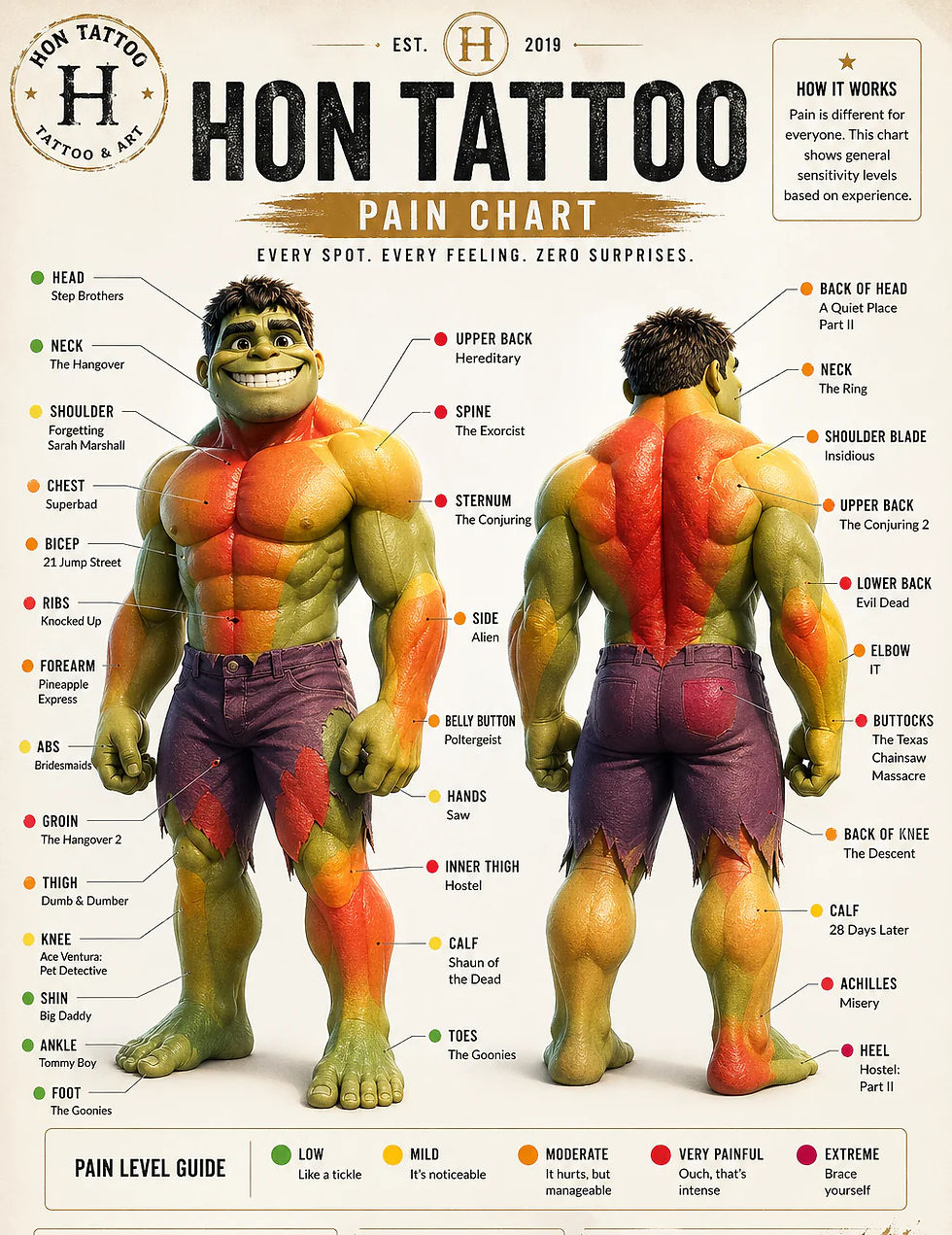
Low friction placements are body areas that heal with fewer interruptions from movement, pressure, sun, and clothing.
For many first tattoos, the outer upper arm, outer forearm, upper thigh, and calf tend to feel manageable because they give the artist usable space and usually create fewer healing problems than ribs, hands, feet, or the centre of the chest. That does not mean they are painless. It means they are often easier to live with during healing.
The outer upper arm is a common starting point for a reason. It is usually coverable, not too exposed, and does not face constant bending or rubbing. The calf can also work well if your clothing and daily movement do not create too much friction. The upper thigh gives privacy, but tight trousers and frequent sitting can make healing less relaxed for some people.
The outer forearm is where many people feel torn. It offers a clean canvas and tends to suit many designs, including a fine line tattoo or small symbolic work. But it is more visible in daily life. That makes it a good placement only if you already know you are comfortable being seen with it.
Pain matters, but context matters more than the chart
Tattoo pain is real, but placement comfort depends on both the body area and your personal stress level.
Pain charts can be useful as a rough guide. Areas with thinner skin, more nerve concentration, or less cushioning usually feel sharper. Ribs, sternum, spine, ankles, feet, inner arm, and hands often feel more intense than outer arm or calf placements. But charts can create too much fear when taken as a promise.
What many first timers do not expect is how much uncertainty increases pain. If you choose a placement you already feel conflicted about, your body tends to stay tense. If you choose a spot that feels sensible and manageable, the session often feels more tolerable because you are less mentally overwhelmed.
This is why a first tattoo does not need to prove anything. You do not need to start with the ribs because the design feels meaningful. You can place meaningful work somewhere calmer. A good Toronto tattoo studio should help you separate the symbolism of the piece from the pressure to choose a dramatic location.
If pain is your main concern, start by removing the high intensity zones from your shortlist. That usually leaves you with better first options and a more grounded consult conversation.
Visibility should match your comfort, not your impulse
Tattoo visibility is the degree to which your placement affects your social, professional, and private life every day.
People often underestimate this part because they imagine the tattoo in ideal conditions. They picture summer, short sleeves, and confidence. They do not picture client meetings, family events, formalwear, or the quiet moment six months later when they wonder whether they wanted something more private.
The most useful first tattoo question is “Do I want to see this often, or choose when others see it?” If you want control, the upper arm, upper thigh, ribs, back, or calf usually offer more flexibility. If seeing it daily matters to you, the forearm can feel satisfying. Hand, wrist, and neck placements are usually not first tattoo choices for people who still feel uncertain.
Work-life matters here too. Even in a city with many visible tattoos, not every workplace feels the same. A North York tattoo client working in a formal office may need a different placement strategy than someone in a creative field downtown. A Vaughan tattoo client who spends long days in fitted uniforms may need to think more carefully about both visibility and rubbing.
If your placement choice changes depending on who is in the room, that is useful information. It usually means you are not deciding only on taste. You are deciding on readiness.
Healing goes better when you think about clothing, movement, and season

Tattoo healing is easier when your placement avoids constant rubbing, sweat, pressure, and sun exposure.
This is where practical thinking saves a lot of frustration. A tattoo can be perfect on paper and difficult in real life if it sits under a bra strap, waistband, sock line, sports gear, or tight sleeve. The first week or two often reveals whether the placement supports healing or fights it.
Forearm tattoos are visible and usually easier to monitor, but they also see more sun and daily contact. Thigh tattoos can be discreet, but fitted clothing and frequent sitting may irritate the area. Foot and ankle tattoos sound appealing to many first timers until they realize how much footwear interferes. Rib tattoos can heal well, but every twist, stretch, and sleep position reminds you they are there.
Season matters as well. Summer can complicate healing if your preferred spot will be exposed to the sun, swimming, or heat. This is one reason some people compare summer tattoo placements before they book.
A good consult should include questions about your routine. What you wear to work. Whether you train. How much do you walk? Whether you travel soon. At Hon Tattoo Studio, those details matter because placement is not only about where a tattoo looks good. It is about where it can heal well in your real life.
Good placement supports the design now and later
Design longevity means choosing a body area where the tattoo can still read well as your skin moves, ages, and changes over time.
This is the part many first timers only discover after researching artists. A design does not sit the same way on every body area. Some placements stretch, crease, or distort more with movement. Some areas give small tattoos enough breathing room. Others make them feel cramped or visually lost.
A simple symbol may look clean on the outer forearm, upper arm, or calf because the space supports clarity. A delicate script tattoo may feel more elegant on one area and more fragile on another. A larger idea may need a placement that lets it flow with muscle and body lines rather than fighting them.
This is also why artist fit matters. If your idea leans minimal, ornamental, illustrative, or fine line, placement should be discussed together with style. The right tattoo artist will not just say yes to the first spot you mention. They will explain whether the design will hold, read clearly, and still make sense later.
If you think you may collect more tattoos over time, leave room for that possibility. You do not need a full plan, but a placement can either protect future options or limit them. This piece on building a cohesive tattoo collection can help if that thought is already in the back of your mind.
The best first placement is the one you can explain calmly at your consult
The right first tattoo placement is the one that still makes sense after you consider pain, visibility, healing, work, and the design itself.
That usually means you can explain your choice in plain language. You want to hide it at work but see it sometimes. You want lower pain and easier healing. You want the design to stay clear. You do not want clothing friction. When your reasoning sounds calm instead of defensive, you are often close to the right decision.
A useful consult question is not “what is the best placement.” It is “which of these two placements fits my design and routine better.” That gives the artist something real to help with. It also shows you are thinking beyond impulse.
If you are deciding between highly visible and more private placements, pause before choosing the one that feels boldest. First tattoos tend to feel better when they match your present comfort level, not the version of you that you think you should be.
When you are ready, Hon Tattoo Studio can help you think through placement with the design, your schedule, and your comfort in mind. No pressure. Just a clearer conversation before you commit.
Frequently Asked Questions About First Tattoo Placement in Toronto

Where should I get my first tattoo?
The best first tattoo placement is usually an area with moderate pain, flexible visibility, and easier healing. The outer upper arm, outer forearm, calf, and upper thigh are common starting points because they often balance comfort and practicality.
What is the least painful spot for a first tattoo?
The least painful spots for many people are areas with more muscle and fewer bony points, such as the outer upper arm or calf. Pain is still personal, so use pain level as one factor rather than the only one.
Is the forearm a good first tattoo placement?
Yes, the forearm can be a good first tattoo placement if you are comfortable with visibility. It usually gives solid design space, but it is harder to hide in some work and family settings.
What tattoo placements heal the easiest?
Placements that avoid constant rubbing and bending often heal more easily, such as the outer upper arm and sometimes the calf. Healing also depends on your clothing, routine, and how well you can keep the area clean and protected.
Should I avoid hand or neck tattoos first?
Yes, most first-timers should avoid hand or neck tattoos at first. These areas are highly visible, often more intense to tattoo, and can create work and long-term placement issues if you are still figuring out your comfort level.
Visit Hon Tattoo Studio
Downtown Toronto
202 Queen St W, 2nd Floor, Toronto, ON M5V 1Z2
(437) 533 7749
North York
6293 Yonge St, North York, ON M2M 3X6
(905) 604 5102
Vaughan
9671 Jane St Unit 4, Vaughan, ON L6A 3X5
(416) 728 8922
Website: hontattoo.com
Instagram: @hontattoostudio
Also, if you click the button below and send us your tattoo-related questions, we will do our best to provide you with accurate answers.


