
Tattoo Cover Up Toronto: Can Your Old Tattoo Be Covered?
- hontattoostudio
- Jun 1
- 7 min read
Updated: Jun 10

Before cover up by Hon Tattoo Studio in north York, Vaughan and Downtown Toronto 
After cover up by Hon Tattoo Studio in north York, Vaughan and Downtown Toronto
You are probably looking at an old tattoo and trying to judge what is still possible.
Maybe the tattoo feels too dark, too small, too dated, or too tied to a version of you that no longer fits. You may already know you want a change, but the real question is whether a cover-up is realistic or whether you are about to force a result that will disappoint you.
That hesitation is normal. Cover-ups are where hope and limitation meet, and a lot of people in Toronto start researching only to find vague promises, filtered photos, or advice that does not explain the tradeoffs clearly.
This guide will help you understand when a cover-up makes sense, when laser lightening may be the smarter first step, what design compromises are common, and how to compare artists before you commit.
A successful tattoo cover-up means the old tattoo stops reading first

A successful tattoo cover-up is a tattoo where the previous design does not dominate the new one. That does not always mean the old tattoo disappears perfectly under any concept you choose.
This is the first reset many people need. A cover-up is not magic. It is a design problem-solving using shape, contrast, saturation, texture, and placement flow. The question is not only, “Can this be covered?” The better question is, “What kind of new tattoo can cover this well?”
Size matters. Darkness matters. Scar tissue matters. So does what the old tattoo actually is. Fine faded script is very different from a dense black tribal band. An old name on the ribs behaves differently from a packed forearm piece.
In a Toronto tattoo studio, good cover-up planning starts with a realistic visual assessment. If an artist immediately says yes without explaining limits, that is usually not the reassurance you want. You want someone who can tell you what must change for the result to work long-term.
Some old tattoos can be covered directly, but others need laser lightening first
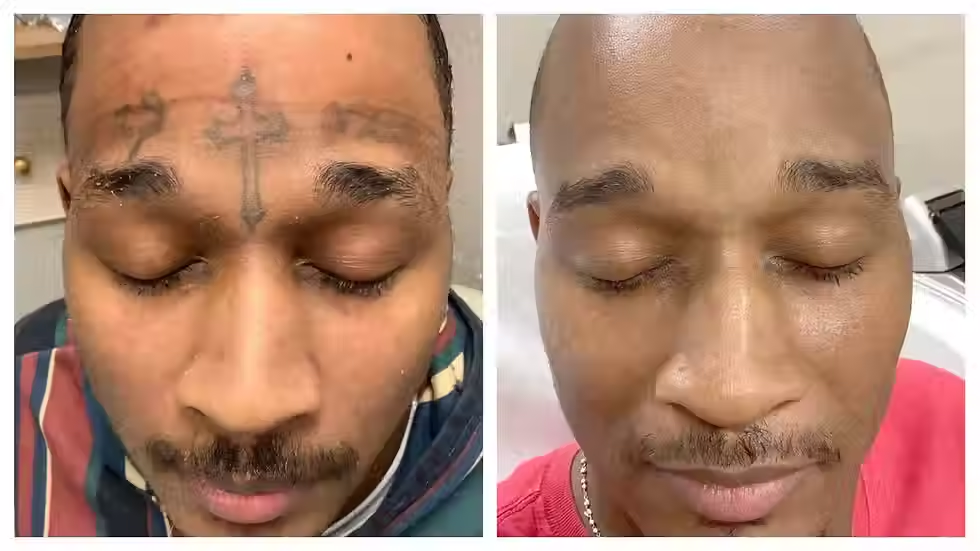
Laser lightening means reducing the value and visibility of the old tattoo before the new one is designed over it. It is often the difference between a forced cover-up and a cleaner, more flexible result.
People sometimes resist this because they want one appointment and one solution. That is understandable. But if the existing tattoo is very dark, heavily saturated, or large for the area, insisting on a direct cover-up can push you into a design you do not actually want.
Laser lightening can open up more options. It may let you choose softer transitions, more negative space, or a style that would otherwise struggle to hide the old work. It can also reduce the need to make the new tattoo much larger than planned. If you are researching laser tattoo removal, think of it less as starting over and more as making the cover-up more possible.
That said, not every old tattoo needs a laser first. Some are faded enough already. Some have the right shape for a new composition to absorb them. A skilled artist should be able to explain whether your tattoo is a direct cover-up candidate or whether lightening would give you a safer result.
Cover up tattoos always involves design compromise, and that is not a failure
Design compromise means the new tattoo must respond to the old one rather than ignore it. This is the part many people sense but do not want confirmed.
If your ideal design is light, airy, minimal, or very small, an old dark tattoo may not support that idea well. Cover-ups often need more depth, stronger structure, and a larger footprint. Florals, organic textures, ornamental movement, layered shading, and some forms of realism can work well because they create places to bury old information. Some people looking at cover-up tattoos in Toronto realize the best result comes from letting go of the exact image they first imagined.
This does not mean your new tattoo has to feel heavy or obvious. It means the design needs enough authority to hold the area. In some cases, black and grey realism works. In others, Japanese-inspired composition works better because the background, flow, and layering can redirect the eye. If you are exploring Japanese tattoo Toronto, this is one reason that style is often considered for larger reworks.
The healthiest mindset is to ask what the new tattoo needs to do, not just what it needs to look like. A cover-up is part art, part strategy. When people regret cover-ups, it is often because they chose the image first and the solution second.
The right cover-up artist shows you evidence, not optimism
A good cover-up artist is someone who can read the existing tattoo and design around its limits with intention. That skill is different from being good at tattooing in general.
When comparing artists in Toronto, look specifically for healed cover-up work, not only fresh photos. Fresh ink can hide a lot. Healing reveals whether old lines, shapes, and dark patches still push through in ways that weaken the new design. If you are already comparing a tattoo artist, pay attention to whether their portfolio shows problem-solving, not just attractive standalone pieces.
You should also notice whether the artist works in a style that naturally supports a cover-up structure. For example, if your old tattoo is dense and high contrast, an artist who mainly posts ultra-delicate fine-line work may not be the right fit for this specific job. Likewise, if you want a realism-based cover-up, reviewing realism tattoo artists can help you judge whether texture, shadow, and depth are being used with control.
A strong consultation usually includes clear language about size increase, placement spread, colour limits, and whether a laser would improve the result. At Hon Tattoo Studio, that clarity matters more than saying yes too quickly. The right answer is the one you can live with, not the one that sounds easiest in the room.
Placement, scale, and body flow decide more than most people expect
Placement strategy means using the body itself to help the new tattoo take visual control. This is why two cover-ups with the same old tattoo can turn out very differently.
A small, isolated old tattoo often needs a new design that extends beyond its original boundary. That can feel frustrating at first, but expansion is often what makes the new piece look intentional instead of patched. On the arm, shoulder, thigh, or calf, body flow gives an artist room to redirect attention. In tighter areas, the options can narrow quickly.
This is also where long-term planning matters. If you already have other tattoos or want more later, the cover-up should not solve one problem while creating another. Thinking in terms of a cohesive tattoo collection can prevent that boxed-in feeling where one correction limits everything around it.
For readers searching for tattoo shops near me, tattoo shops in Toronto, or even a North York tattoo or Vaughan tattoo option, this is an important comparison point. Ask whether the studio talks about body flow and future compatibility, not just concealment. A cover-up should belong on your body, not sit on top of a problem.
The best time to book a cover up is when your expectations become specific
Readiness for a cover-up means you understand both the goal and the limits of the process. That is usually the moment when anxiety starts to settle.
If you are still hoping for a tiny, pale, effortless replacement over a very dark old tattoo, you may need more consultation before booking. If you understand that the new piece may be larger, darker in parts, more structured, or improved by laser first, you are much closer to making a decision that holds up.
It can help to gather a few reference images for mood, depth, and composition rather than one exact tattoo you want copied. It also helps to photograph the current tattoo clearly in natural light so the artist can assess density and shape. The more specific you are about what you dislike in the old tattoo and what you want the new tattoo to feel like, the better the design conversation becomes.
If you are in Downtown Toronto, North York, or Vaughan, take your time comparing consultation quality. The right Toronto tattoo studio will not make you feel rushed into a yes. Good cover-up decisions come from clarity, not pressure.
When you are ready, a cover up should feel like a considered change
A cover-up is worth doing when the new tattoo has a real chance to outlive the old one in both design and meaning.
That often means accepting a bigger conversation before the appointment. You may need to hear that laser lightening would help. You may need to shift styles. You may need to let the new piece occupy more space than you first planned. None of that means the idea is failing. It means the process is working.
If you want a professional opinion on whether your current tattoo is a good cover-up candidate, Hon Tattoo Studio can help you assess it with realistic eyes. When you are ready, we are here to help you make the decision more clearly.
Frequently Asked Questions About Tattoo Cover Up Toronto

Can any tattoo be covered up?
No, not every tattoo can be covered directly. Some tattoos are too dark, too large, or too dense for a clean cover-up without laser lightening first. A consultation should assess the tattoo’s value, size, and placement before promising a result.
How much bigger does a cover up tattoo need to be?
A cover-up tattoo usually needs to be somewhat bigger than the original. The extra space helps the new design absorb the old shape and redirect the eye. How much bigger depends on darkness, placement, and the style you want.
When do I need a laser before a cover up?
You need a laser before a cover-up when the old tattoo is too saturated or limiting for the new design to work well. Lightening is often recommended for heavy black ink, packed colour, or designs with strong visible outlines. It can create more freedom and a cleaner final result.
What styles work best for cover up tattoos?
Styles that work best for cover-up tattoos usually have enough depth, contrast, and layering to control the old image. Black and grey realism, florals, ornamental work, and some Japanese compositions are common options. The right style depends on what needs to be hidden, not only on personal taste.
How do I choose a cover up tattoo artist in Toronto?
Choose a cover-up tattoo artist in Toronto by looking for healed cover-up examples and clear consultation skills. Ask how they assess darkness, size, and whether a laser is needed. An artist who explains limits clearly is usually a safer choice than one who promises everything.
Visit Hon Tattoo Studio
Downtown Toronto
202 Queen St W, 2nd Floor, Toronto, ON M5V 1Z2
(437) 533 7749
North York
6293 Yonge St, North York, ON M2M 3X6
(905) 604 5102
Vaughan
9671 Jane St Unit 4, Vaughan, ON L6A 3X5
(416) 728 8922
Website: hontattoo.com
Instagram: @hontattoostudio
Also, if you click the button below and send us your tattoo-related questions, we will do our best to provide you with accurate answers.


