
Tattoo Pain Chart Toronto: Choose the Right Placement
- hontattoostudio
- May 28
- 7 min read
Updated: Jun 10

Pain matters.
If you are looking at a tattoo pain chart Toronto query, you are probably not asking for trivia. You are trying to decide whether your design still makes sense in the spot you chose, or whether the pain will change the whole experience.
That hesitation is common. People often like the idea of a rib tattoo, sternum piece, or inner arm script until they imagine sitting through it. Others pick a less intense placement, then worry the tattoo will feel too visible, too exposed, or simply wrong for the design.
This is where the decision gets clearer. A pain chart is useful when it helps you choose better, not when it scares you into guessing. The goal is not to prove your tolerance. The goal is to place the tattoo where you can sit well, heal well, and still like it years later.
A tattoo pain chart is a guide, not a rule

A tattoo pain chart is a rough map of how different body areas tend to feel during tattooing. It can help you compare placements, but it cannot predict your exact experience.
Most people feel more pain in areas with thinner skin, less fat, and more nerve concentration. Places close to the bone also tend to feel sharper. That is why ribs, feet, sternum, hands, and parts of the ankle often rank higher than outer arm, outer thigh, calf, or shoulder.
What the chart does not show well is duration. A small tattoo on a painful area may still be easier than a long session on a moderate area. Placement pain and session length work together, so a chart only tells part of the story.
This is one reason first-time tattoo clients in a Toronto tattoo studio sometimes choose a lower pain area first. It gives them a better read on their own tolerance before committing to something more demanding. If you are still deciding between placements for a first piece, this guide on your first tattoo experience may help you compare comfort with design goals.
Some placements are easier to sit through for most people
The least painful tattoo placements are usually the outer arm, outer shoulder, upper thigh, and calf. These areas tend to give the body a little more margin.
The outer upper arm is often one of the safest starting points. It is usually manageable, easy to conceal if needed, and flexible for many design types. Fine line work, symbols, script, and medium-sized illustrative pieces can all work well there.
The outer thigh is another strong choice if you want space without jumping into a very intense area. It tends to suit larger compositions better than small placements, and it can be easier to heal because clothing friction is often easier to control than with feet or ribs.
Calves and outer shoulders also sit in the more manageable range for many people. That does not mean painless. It means the discomfort is often steadier than sharp, which can be easier to tolerate.
By contrast, ribs, sternum, spine, armpit area, hands, fingers, feet, and ankles often feel more intense. Inner bicep and inner wrist can also surprise people because the skin is more sensitive than they expect. If you love one of those placements, that does not mean you should avoid it. It means you should decide with open eyes, not with a pain chart fantasy.
Pain changes for reasons that have nothing to do with toughness

Tattoo pain is affected by your body, your timing, and the design itself. It is not a character test, and it is not explained well by gender stereotypes.
People often ask whether women or men feel tattoo pain more. In practise, that question is less useful than it seems. Sleep, hydration, stress, hormones, nutrition, recent illness, and baseline sensitivity usually matter more to the actual appointment than broad assumptions about gender.
The design matters too. Fine-line tattoos can feel light in one placement and sharp in another because needle grouping, repetition, and skin tension all change the sensation. A simple black script tattoo can be quick on the forearm but much harder on the ribs. A larger realism tattoo may sit in a moderate area, yet become difficult because the session is long. If style is still part of your decision, it helps to compare how your design choice interacts with placement, whether you are considering fine-line tattoo work or something like realism tattoo.
Your mental state also changes pain. When clients are bracing for every second, the body tends to stay tense. That tension can make even moderate placements feel harder. Pain often becomes more manageable when the plan feels realistic, the timing is right, and the client is not forcing a placement that already feels wrong.
The right question is not “Can I handle it?” but “Does this placement still make sense?”

A good placement decision balances pain, design flow, visibility, and long-term comfort. Pain is part of the decision, but it should not be the only one.
A design may look elegant on the ribs in a reference photo but lose clarity when scaled down for your body. A hand tattoo may feel bold now, but create visibility issues you are not ready for. A tiny ankle piece may seem easier emotionally because it feels low commitment, yet that area can be more uncomfortable and more prone to friction during healing.
This is where many people benefit from reframing the decision. Instead of asking whether you can push through the pain, ask whether the tattoo will still be the right size, shape, and placement after you account for pain, healing, and readability. A placement is only “right” if the tattoo works well there.
For clients building a larger sleeve or an ongoing body plan, the decision becomes even more important. One tattoo that is placed only around a temporary pain preference can disrupt future flow. If you are thinking beyond one piece, this article on building a cohesive tattoo collection can help you think more clearly about sequence and placement.
Moving, resizing, or simplifying a design is often the smarter decision
Changing the plan before booking is usually a sign of judgement, not doubt. Many of the best tattoo decisions happen when a client permits themselves to adjust.
If you love the idea but not the pain level of the original spot, you may not need a different tattoo. You may need a better version of the same one. A script that was heading to the ribs may sit more naturally on the outer forearm. A small ornamental piece planned for the sternum may work better at a slightly larger scale on the upper thigh. A symbol meant for the finger may become more durable and easier to live with on the wrist or behind the arm.
Sometimes resizing is the real answer. Small tattoos on painful placements can sound easier, but tiny scale often asks more of line precision and placement accuracy. If the design needs breathing room, moving it to a calmer area can improve both comfort and the final result.
At Hon Tattoo Studio, this is often where the consultation matters most. A useful consultation does not just approve your first idea. It helps test whether the piece still works once pain, healing, visibility, and body flow are considered. If you are comparing artists, it also helps to understand the difference between a polished portfolio and a true style fit with your design and decision process. This article on choosing a tattoo artist may help with that comparison.
Toronto clients usually regret rushed placement decisions more than the pain itself
Most tattoo regret starts before the needle touches skin. It usually begins when someone commits to a placement they were already questioning.
In a Toronto tattoo studio, especially with first tattoos, the common pattern is not that the tattoo was too painful. It is that the person chose a spot because it looked bold, discreet, trendy, or easy to explain, then realized later it did not suit the design or their life as well as they hoped.
That is why the best pain decision is often a placement decision. If you are torn between an ideal visual location and a more manageable one, pause long enough to ask what matters more for this specific tattoo. Do you want privacy? Visibility. Room to grow the design later. Less friction during healing. A calmer first experience. Those are better decision tools than a generic pain ranking.
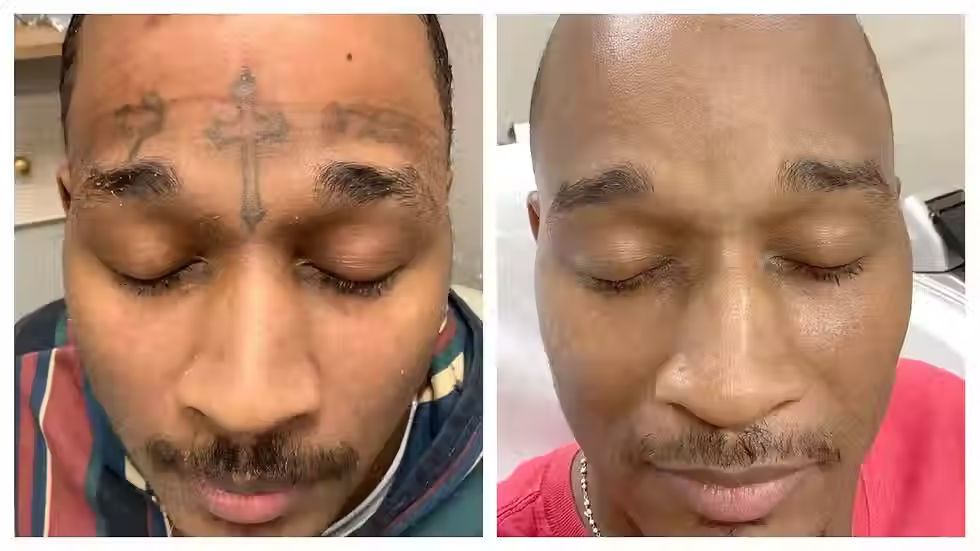
For some people, that pause leads to more confidence. For others, it reveals they are not ready for that exact tattoo yet. That is still useful clarity. A delayed tattoo is easier to live with than a rushed one. And if part of your hesitation comes from wondering what happens if you change your mind later, learning about laser tattoo removal can reduce some of the all-or-nothing pressure without making removal the plan.
When you are ready, choose the placement that lets you stay clear
The best tattoo placement is the one that fits both the design and your real tolerance. That may be the original spot, a revised version, or a different area entirely.
If your current plan only works when you ignore pain, healing, visibility, or scale, it is worth revisiting before you book. If the design still feels right after those questions, your confidence is probably coming from clarity rather than momentum.
Whether you are looking for a North York tattoo, a Vaughan tattoo, or a Downtown Toronto consultation, the goal is the same. You should leave the decision feeling settled, not cornered by it. When you are ready, Hon Tattoo can help you think through the placement before anything becomes permanent.
Frequently Asked Questions About Tattoo Pain Chart Toronto

Does a tattoo pain chart actually help?
Yes, a tattoo pain chart helps as a starting point. It shows which areas tend to be more sensitive, but it does not predict your exact pain, session length, or healing experience.
What is the least painful place for a tattoo?
The least painful places for many people are the outer upper arm, outer shoulder, upper thigh, and calf. These areas usually have more tissue and feel more manageable than ribs, feet, hands, or sternum.
Are rib tattoos always very painful?
Rib tattoos are painful for many people, but not in exactly the same way for everyone. The area is sensitive, close to bone, and often harder during longer sessions or when breathing makes the skin move.
Should I move my tattoo if I am worried about pain?
Yes, sometimes moving your tattoo is the better decision. If the placement is making you hesitate, relocating or resizing the design can improve comfort, healing, and long-term satisfaction.
Does tattoo pain depend on gender?
No, tattoo pain does not depend reliably on gender. Sleep, stress, hormones, health, hydration, placement, and session length usually affect the experience more than gender assumptions.
Visit Hon Tattoo Studio
Downtown Toronto
202 Queen St W, 2nd Floor, Toronto, ON M5V 1Z2
(437) 533 7749
North York
6293 Yonge St, North York, ON M2M 3X6
(905) 604 5102
Vaughan
9671 Jane St Unit 4, Vaughan, ON L6A 3X5
(416) 728 8922
Website: hontattoo.com
Instagram: @hontattoostudio
Also, if you click the button below and send us your tattoo-related questions, we will do our best to provide you with accurate answers.


