
Cross Tattoo Meaning: Symbolism, Style, Placement
- hontattoostudio
- Jun 30
- 7 min read

A cross tattoo often represents faith, protection, remembrance, sacrifice, hope, identity, or a private promise the wearer wants to keep close. For some people, the meaning is explicitly religious. For others, the cross is connected to family, grief, recovery, heritage, or a personal chapter that changed how they see themselves.
People search for cross tattoo meaning because the symbol is simple to recognize, but not simple to choose. A small cross on the wrist, a fine-line cross behind the ear, a blackwork cross on the forearm, and a larger cross with flowers or script can all feel completely different.
The useful question is not only what a cross means in general. It is what this cross should mean for you, how public that meaning should be, and what style will still feel respectful and readable years from now.
What Does a Cross Tattoo Mean?
A cross tattoo commonly means faith, devotion, remembrance, protection, sacrifice, hope, or a steady personal belief. The exact meaning depends on the person wearing it, the type of cross, the design details, and the context around the tattoo.
For many people, the cross is connected to Christian faith or a spiritual relationship they want to carry on their body. In that case, the tattoo may feel like a visible statement of belief, a quiet reminder, or a symbol of guidance during difficult times.
For others, the cross is less about public religion and more about memory. It may represent someone who passed away, a family member, a life event, or a promise to stay grounded after loss. A cross can also mark survival, recovery, protection, or a choice to keep going after a hard period.
Because the cross carries deep associations for many communities, it should not be treated like a random decorative shape. A good cross tattoo does not need to explain everything to strangers, but it should feel honest to the wearer and considered in how it is drawn.
How Do You Make a Cross Tattoo Feel Personal?
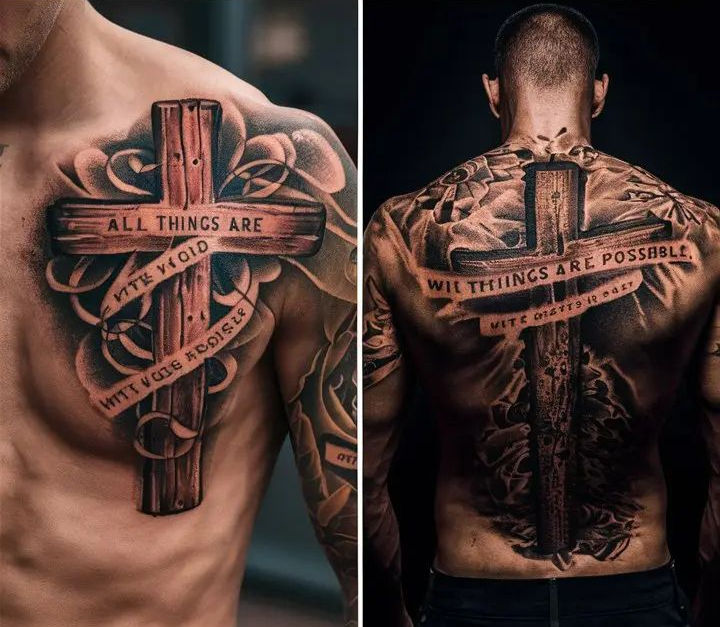
You make a cross tattoo feel personal by deciding what the symbol is carrying before adding extra details. The meaning might be faith, a loved one, a family tradition, a personal turning point, or a quiet reminder to live by certain values.
A plain cross can be powerful when the meaning is direct. It may not need wings, a clock, a date, a banner, flowers, rays, beads, or script. If the main reason is private, a clean design can protect that privacy better than a crowded composition.
Details can still help when they have a clear job. A name or date can make the tattoo memorial. A flower can soften the emotional tone. Fine-line script can add a phrase, prayer, or initials. A blackwork approach can make the cross feel bold and steady. A small halo of negative space can keep the design calm without making it decorative.
Try to avoid adding every meaningful object at once. A cross, portrait, dove, rosary, clouds, clock, hands, roses, and a long quote may all matter, but together they can compete. A lasting tattoo usually works better when one idea leads, and the other details support it.
Which Cross Tattoo Style Fits the Meaning?
Cross tattoo style changes whether the piece feels delicate, devotional, memorial, bold, ornamental, traditional, or modern. A fine-line cross feels quiet and minimal. It can work well for small placements, but it needs clean spacing and enough length so the shape does not blur into a plus sign as it heals.
Blackwork crosses feel stronger and more graphic. They can be simple, heavy, geometric, gothic, or ornamental depending on the line weight and shape. This style can work well when the wearer wants the tattoo to feel grounded and visible without relying on many extra symbols.
Black and grey realism can fit larger memorial or religious compositions, especially when the cross is paired with hands, flowers, clouds, light, portrait elements, or fabric texture. This direction usually needs more room because shading and detail need space to stay readable.
Script and lettering can work with a cross, but the words should be edited carefully. Short initials, a date, one phrase, or a compact line often ages better than a long sentence wrapped around a small cross. If the words are the most important part, the design should be planned around the lettering, not squeezed in at the end.
Where Should a Cross Tattoo Be Placed?

A cross tattoo should be placed where the shape can stay straight, balanced, and readable with the body. Common placements include the forearm, wrist, upper arm, chest, ribs, shoulder, back of the neck, ankle, hand, and behind the ear.
A small cross can work on the wrist, ankle, collarbone, finger area, or behind the ear if the design is simple enough. Very small crosses should avoid too much texture, shading, or tiny lettering because those details can soften quickly on skin.
A forearm cross is more visible and direct. It can be a good choice for someone who wants the meaning to be seen often. The upper arm, chest, shoulder, ribs, or back can feel more private and give the artist more room for shading, flowers, script, or a larger composition.
Placement also changes the emotional tone. A chest cross can feel close to the heart. A wrist cross can feel like a daily reminder. A back-of-neck cross can feel quiet but still visible with certain clothing or hair. A hand or finger cross is highly visible and should be chosen with extra care because it affects how often the tattoo is seen and how it may age.
What Should You Consider Before Getting a Cross Tattoo?
Before getting a cross tattoo, consider whether the symbol should feel public, private, religious, memorial, cultural, or personal. The same cross can be read differently depending on design, placement, size, and context.
If the tattoo is connected to faith, it is worth thinking about how direct you want that statement to be. Some people want a clearly devotional design. Others want a quiet symbol that does not invite conversation every time it is visible.
If the tattoo is memorial, decide whether the cross should stand alone or carry a name, date, flower, or other reference. A memorial tattoo can be emotional, but it still needs design discipline. The goal is to honour the person or moment without making the tattoo so crowded that it loses clarity.
Also think about future tattoos. A small cross can stand alone, but it can also become part of a sleeve, floral piece, script design, or black and grey composition later. Leaving enough space around it can make future planning easier.
Which HON Artists May Fit a Cross Tattoo?

A cross tattoo can fit different HON artist directions depending on whether the design is fine line, blackwork, realism, lettering, or geometric.
For a fine line or small cross, Anu (@anu.tattoo), Jennifer (@jennyi.tattoo), Winnie (@winniec_tattoos), Brandon (@baae.inks), or Sarah (@sarahstarz.tattoo) may fit depending on placement and detail level.
For a stronger blackwork cross, Yongha (@yongha_blk), Min (@tattooermin), Dave (@dirrty.tats), Nika (@enormityink), or Sarah (@sarahstarz.tattoo) may be relevant.
For black and grey realism, memorial elements, or a larger shaded cross design, Piven (@piven_tattoo), Cris (@crissgarnica), Anthony (@tonyfioretattoos), Vincent (VK) (@vk.ink.realism), or Rima (@rimatattoo) may fit the direction.
The right artist depends on the actual design problem. A tiny wrist cross, a chest cross with script, a blackwork forearm cross, and a memorial cross with realistic flowers are different tattoos even when the symbol is the same.
Frequently Asked Questions About Cross Tattoo Meaning in Toronto
Q: What does a cross tattoo mean?
A: A cross tattoo usually means faith, remembrance, protection, sacrifice, hope, identity, or a personal promise. The exact meaning depends on the wearer and design.
Q: Is a cross tattoo always religious?
A: No, a cross tattoo is not always religious. Many people choose it for faith, but others connect it with family, grief, recovery, protection, or a private life chapter.
Q: Where is the best place for a cross tattoo?
A: The best place for a cross tattoo depends on size and visibility. Wrist, forearm, chest, ribs, upper arm, ankle, neck, and shoulder placements can all work well.
Q: Can a cross tattoo be small?
A: Yes, a cross tattoo can be small if the design is simple. Tiny crosses usually age better with clean lines, limited detail, and no cramped lettering.
Q: What style is best for a cross tattoo?
A: The best cross tattoo style depends on the meaning. Fine line feels quiet, blackwork feels bold, and black and grey realism fits larger memorial or devotional designs.
A calm next step:
If you are thinking about a cross tattoo, send the rough placement, preferred size, style references, and whether the design should feel religious, memorial, private, bold, or minimal. You do not need to explain personal details you would rather keep private. A few clear design clues are enough to start.
HON can help decide whether the cross should stay simple, include lettering, pair with flowers or another symbol, or become part of a larger black and grey, fine line, blackwork, or realism piece.
Toronto tattoo studio context:
Hon Tattoo Studio works with clients across Downtown Toronto, North York, Vaughan, and the GTA who want meaningful tattoos to feel considered, respectful, and wearable over time. For cross tattoos, the most useful first step is a clear reference, rough size, placement, and a note about whether you want the tattoo to feel quiet, devotional, memorial, or visually bold.
Visit Hon Tattoo Studio
Downtown Toronto
202 Queen St W, 2nd Floor, Toronto, ON M5V 1Z2
(437) 533 7749
North York
6293 Yonge St, North York, ON M2M 3X6
(905) 604 5102
Vaughan
9671 Jane St Unit 4, Vaughan, ON L6A 3X5
(416) 728 8922
Website: hontattoo.com
Instagram: @hontattoostudio
Also, if you click the button below and send us your tattoo-related questions, we will do our best to provide you with accurate answers.


