
Biohazard Tattoo Meaning: Symbol, History, and Style
- hontattoostudio
- May 12
- 8 min read
Updated: Jun 10
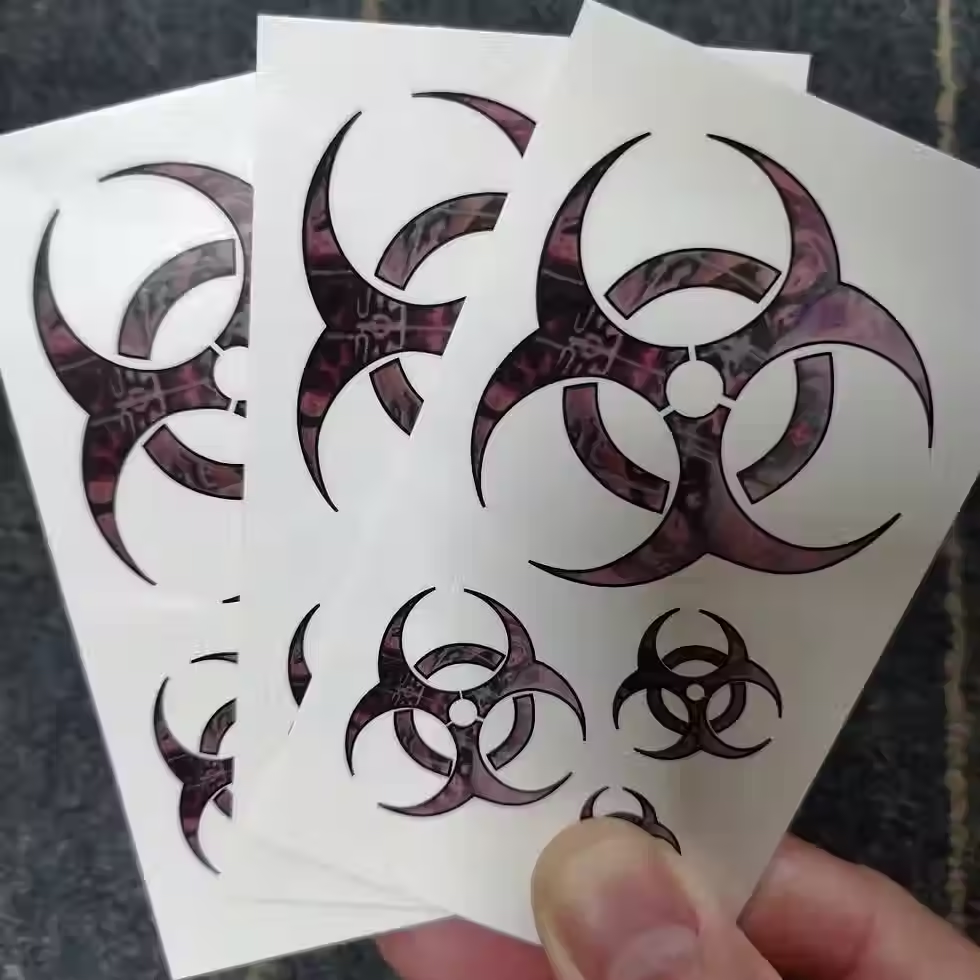
Some symbols feel louder than words.
Biohazard tattoo meaning attracts people for a reason. It looks severe, technical, and confrontational at the same time. But once you move past the sharp geometry, the symbol carries a complicated mix of industrial warning, subcultural identity, and pure graphic appeal.
That tension is usually what makes people pause. Is it a sign of danger, a rebellion symbol, or just a strong design. In practice, it can be any of those, depending on the person wearing it and the way the tattoo is built.
This article breaks down where the symbol came from, how punk and cyber goth culture helped reshape it, and why the same design can read as threatening, ironic, stylish, or emotionally distant. If you are considering one, the point is not to tell you what it means. The point is to help you see what it may already be saying.
The biohazard symbol began as a warning system, not a mystical emblem

The biohazard symbol was created as a practical safety mark for hazardous biological materials.
Its original purpose was functional. It was designed to be clear, recognisable, and hard to confuse with other industrial signs. That matters because the symbol was never meant to carry spiritual depth or ancient mythology. Its authority comes from modern systems of risk, containment, and control.
That origin gives the tattoo a particular tone. Unlike symbols that arrive through folklore or religion, the biohazard mark enters tattoo culture through laboratories, waste protocols, and public safety language. It belongs to a world of sealed doors, gloves, contamination zones, and invisible threats.
Because of that, the symbol often feels colder than other danger based designs. A skull suggests death in a broad, almost theatrical way. A biohazard symbol suggests something present but unseen. That difference is a large part of its appeal.
It also explains why the design still feels current. Even people who do not know its exact history recognise the visual logic of warning signage. The symbol reads fast, and it carries the mood of controlled fear.
In tattoo culture, biohazard often signals rebellion through borrowed danger
In contemporary tattoo culture, the biohazard symbol often works as an act of aesthetic rebellion.
When a warning symbol moves from industrial space onto skin, its function changes. It no longer tells people to stay back from materials in a container. Instead, it can suggest that the wearer identifies with risk, alienation, contamination, or social discomfort. Sometimes that meaning is serious. Sometimes it is intentionally exaggerated.
This is where the tattoo picked up life beyond its original setting. Punk scenes, heavy music circles, club culture, and later cyber goth aesthetics all helped push the symbol into a new context. In those spaces, danger became style, and official warning language became something to reclaim, distort, or perform.
That does not mean every biohazard tattoo is making a political statement. Often, it is more personal than that. Some people are drawn to symbols that look untouchable because they have felt misunderstood. Some like the way the design resists softness. Some simply want a tattoo that does not ask to be read as sentimental.
The symbol can also carry a layer of irony. Wearing a contamination sign on the body can read as dark humour, self-parody, or social armour. That kind of interpretation is common in subcultures where image and attitude are tightly linked.
Punk and cyber goth culture gave the symbol a second life

Punk and cyber goth scenes helped transform the biohazard symbol from warning sign into identity marker.
In punk related aesthetics, the symbol often appeared alongside ideas of rupture, disorder, anti establishment thinking, and refusal. It fit visually with patched clothing, industrial textures, distressed graphics, and other signs of disruption. Its hard geometry gave it a clean, almost official severity, which made it useful for people rejecting official systems.
In cyber goth and industrial club culture, the symbol took on a slightly different role. It became part of a visual language built from synthetic materials, neon accents, masks, tubing, blackwork, and futuristic decay. In that setting, the symbol feels less anarchic and more post human. It suggests toxicity, surveillance, mutation, and a world where the body is always in contact with artificial systems.
That shift matters if you are thinking about design direction. A heavily distressed biohazard tattoo can read punk. A polished version with sharp symmetry and technological framing can lean cyber goth. The base symbol may be the same, but the surrounding choices change the story.
This is one reason tattoos based on warning symbols deserve more thought than people sometimes give them. Symbols do not live in isolation. They inherit meaning from the visual worlds around them. A Toronto tattoo studio like Hon Tattoo Studio will usually look at those surrounding cues before reducing a design to one fixed explanation.
The symbol often means different things in blackwork, chrome, or minimalist styles

Tattoo style changes the biohazard tattoo meaning as much as the symbol itself does.
A blackwork biohazard tattoo usually feels the most severe. Thick contrast, bold fill, and large-scale placement make the design look less like decoration and more like a mark. That version often carries the strongest sense of hostility, protection, or controlled aggression.
A fine line or minimalist version changes the mood. Once the symbol becomes smaller and cleaner, it can start to look more like a graphic reference than a personal warning. In some cases, the design becomes more about visual precision than danger. This is where the tattoo may appeal to people who like industrial iconography but do not want the piece to feel heavy-handed. If you are comparing cleaner approaches, looking at how artists handle fineline tattoo work can help you see how much line weight affects tone.
Chrome, metallic, or cyber-influenced rendering pushes the design even further from its industrial origin. These versions often feel digital, synthetic, and intentionally stylized. They can suggest mutation, futurism, or a fascination with machine age imagery more than biological risk itself.
Realism-based adaptations are less common, but they can create a different kind of tension. If the symbol is rendered on a barrel, suit, mask, or damaged surface, it begins to tell a scene rather than act as a standalone sign. In that case, the tattoo is not only about the emblem. It is about the world the emblem belongs to. For that reason, people exploring more dimensional treatments often compare portfolios in realism tattoo before deciding how literal they want the image to become.
Placement changes whether the tattoo reads as a sign, ornament, or statement
Placement shapes whether a biohazard tattoo feels confrontational, coded, or purely graphic.
On the elbow, kneecap, or shoulder, the design can feel like a structural emblem. Those placements suit the circular symmetry of the symbol and make it look almost built into the body. The tattoo becomes less like a sticker and more like a mechanical or branded form.
On the wrist, side of the neck, or hand, the symbol usually reads more directly. These placements make the warning aspect harder to ignore. They place the sign in social view, which means the tattoo tends to function as a statement, whether or not that was the intention.
Larger chest or back placements shift the interpretation again. At scale, the symbol can start to feel ritualistic, even though its roots are industrial. Large placement gives modern symbols a strange kind of gravity. The more space they occupy, the more they resemble emblems of belief rather than simple graphics.
Context matters too. A biohazard mark inside a larger sleeve will not read the same way as a single isolated symbol. If someone is building a cohesive tattoo collection, the symbol needs to relate to the surrounding language of the body. Otherwise, it can feel visually loud without feeling intentional.
The real question is whether you want danger, irony, or pure design
The most useful way to read a biohazard tattoo is to ask what kind of tension you want it to hold.
For some people, the symbol is about danger. They want the tattoo to feel severe, sealed off, and hard to approach. For others, it is about irony. They like the absurdity of placing an official contamination sign in a personal, aesthetic context. And for many, it is simply about design. The curves lock together well, the symmetry is memorable, and the symbol carries force without requiring narrative.
None of those readings is automatically shallow or deep. What matters is whether the design choice matches the meaning you want to live with. A symbol this recognizable will always bring public associations with it. That does not mean those associations control the tattoo. It means you should know what you are borrowing when you wear it.
This is especially true with highly coded designs. People often spend more time asking what a tattoo means in general than asking what it means in this exact style, on this exact body, at this exact scale. That is usually the more useful conversation. The same is true with other motifs people often search for, such as jellyfish tattoo meaning or symbolic dot work references. The image may be familiar, but the reading changes with form.
If you keep coming back to the biohazard symbol, there is probably a reason. It may reflect your taste for industrial graphics. It may connect to music, fashion, or club culture. It may express detachment, danger, contamination, or survival. Or it may simply be a shape that feels right. That clarity matters more than forcing a dramatic backstory.
When you are ready to explore the idea further, it helps to talk with an artist who can separate trend from intent and design the symbol in a way that fits your actual visual language. If you are still early in the process, looking through thoughts on a first tattoo experience can also help clarify how much meaning, placement, and style should work together.
Frequently Asked Questions About Biohazard Tattoo Meaning

What does a biohazard tattoo mean?
A biohazard tattoo often symbolises danger, contamination, rebellion, or emotional distance. In tattoo culture, it can also function as a graphic emblem chosen for its sharp industrial look rather than a fixed message.
Is the biohazard symbol tattoo offensive?
A biohazard symbol tattoo is not usually considered offensive on its own. Context matters, though, because some people may read it as aggressive, anti social, or linked to specific subcultures.
Why do punks use the biohazard symbol?
Punks have often used the biohazard symbol as a borrowed sign of disruption and refusal. It fits a visual language built around warning, damage, and resistance to polished social norms.
Does tattoo style change biohazard tattoo meaning?
Yes, tattoo style changes how the symbol is read. Blackwork can make it feel harsher, while minimalist or cyber inspired treatments can make it feel more graphic, futuristic, or ironic.
Where should a biohazard tattoo go?
The best placement depends on whether you want the tattoo to feel private, confrontational, or structural. Round placements like the shoulder or elbow suit the symbol well, while visible areas make its warning language much more direct.
If this symbol keeps your attention, that is worth taking seriously. The strongest tattoo choices are often the ones where visual instinct and personal meaning meet in the same place.
At Hon Tattoo Studio, we tend to see symbols like this as design language first and trend second. If you want help clarifying the direction, style, or tone of a piece, we are here when the idea is ready for a sharper conversation.
Visit Hon Tattoo Studio
Downtown Toronto
202 Queen St W, 2nd Floor, Toronto, ON M5V 1Z2
(437) 533 7749
North York
6293 Yonge St, North York, ON M2M 3X6
(905) 604 5102
Vaughan
9671 Jane St Unit 4, Vaughan, ON L6A 3X5
(416) 728 8922
Website: hontattoo.com
Instagram: @hontattoostudio
Also, if you click the button below and send us your tattoo-related questions, we will do our best to provide you with accurate answers.


